
On March 13, 1964, a 28-year-old woman named Kitty Genovese was stabbed outside her apartment building in Queens, New York. According to the New York Times, 38 neighbors watched from their windows. Nobody called the police. Nobody came down to help. She died on the sidewalk while dozens of people looked on.
That story launched a thousand psychology textbooks — and almost all of them got it wrong. The number 38 was exaggerated. Some neighbors did call the police. The attack didn’t unfold the way the papers described. But the myth stuck, and for good reason: it confirmed something we desperately want to believe about other people. That they’re callous. That they’re cowards. That we would have done something.
Here’s what the actual science says: you probably wouldn’t have. Not because you’re a bad person. But because the bystander effect doesn’t care about your character. It operates on structure — and structure doesn’t ask permission.
Social Psychology · Safety
- Bystanders don’t fail to help because of bad character — they fail because of situational structure
- More witnesses makes you less safe, not more — responsibility divides as the crowd grows
- Knowing about the bystander effect doesn’t make you immune — but changing the structure does
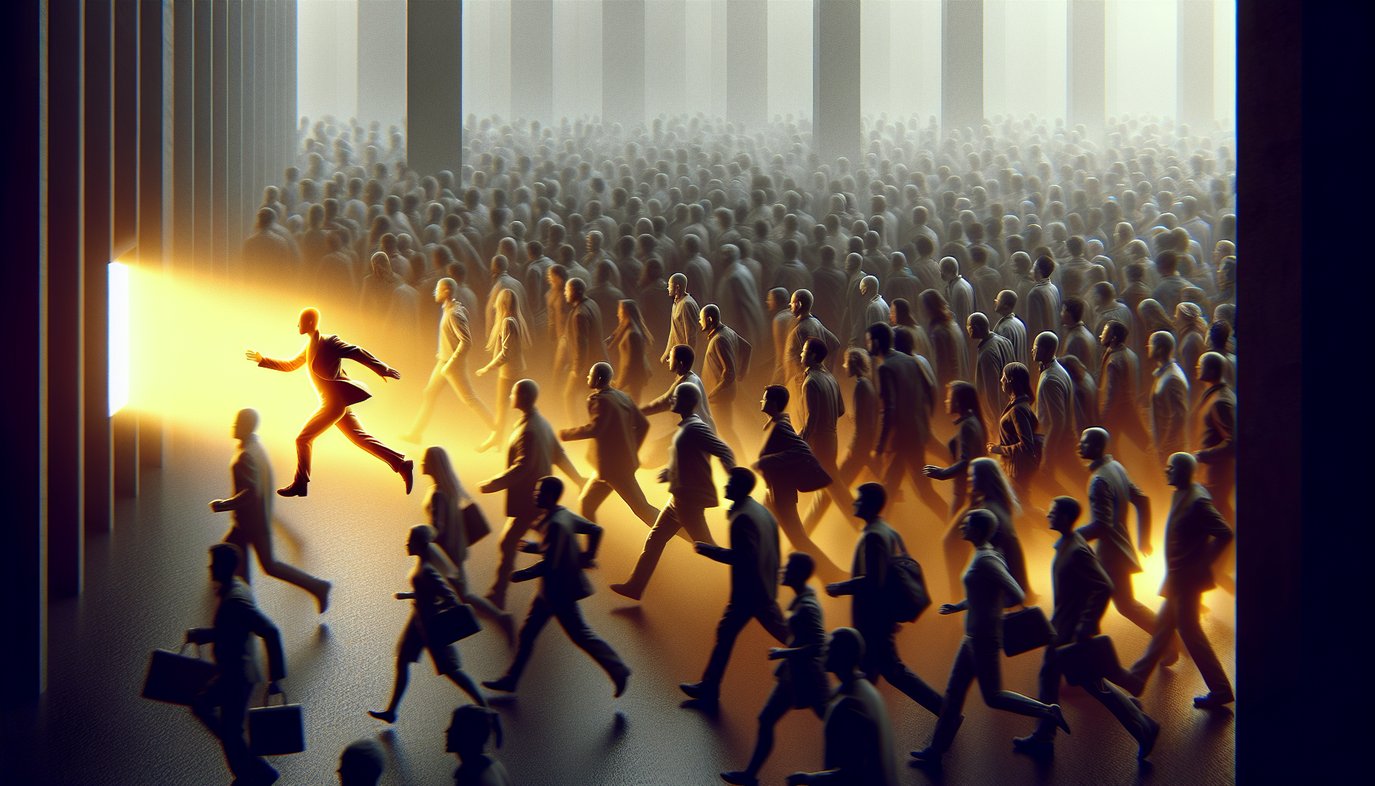
The bystander effect is not a story about bad people. It’s a story about bad structure. When someone collapses on a crowded street and no one moves, the failure isn’t moral — it’s architectural. Three invisible mechanisms suppress helping behavior in groups, and they work on everyone — including you.
🚨 Myth #1: “They Didn’t Help Because They’re Bad People”
The Story We Tell Ourselves
Every time a bystander fails to act — a subway assault, a hit-and-run, a bullying incident — the public reaction follows the same script. “What is wrong with people?” “How could they just stand there?” “I would never do that.” We frame the failure as a character defect: apathy, cowardice, moral rot. It’s comforting. It puts the problem over there, in other people’s broken hearts.
The problem? This explanation is not just wrong. It’s dangerous. If you believe bystander inaction is about bad character, you’ll never fix the structure that actually causes it — and you’ll walk around believing you’re the exception.
What Latané and Darley Actually Found
In 1968, psychologists Bibb Latané and John Darley — haunted by the Genovese case — ran a series of experiments that would rewrite our understanding of helping behavior. In their “seizure experiment,” participants overheard (via intercom) a fellow student apparently having an epileptic seizure. The researchers manipulated one variable: how many other people the participant believed were also listening.
Read those numbers again. The same person who would rush to help when alone becomes passive when surrounded by others. The participants didn’t change. Their empathy didn’t evaporate. The only thing that changed was the structure of the situation — the perceived presence of other potential helpers.
This is the core insight of situational psychology, and it’s profoundly uncomfortable: your personality predicts your behavior far less than the situation you’re in. The bystander who doesn’t help isn’t a bad person in a normal situation. They’re a normal person in a bad situation.
Diffusion of responsibility — The psychological phenomenon where each individual in a group feels less personal obligation to act because they perceive the responsibility as shared among all members. If N people are present, each person’s felt responsibility approaches 1/N. This isn’t laziness — it’s an automatic cognitive recalibration that occurs below the threshold of awareness.
Think of the last time you saw something wrong in a public space — a dropped wallet, a struggling stranger, a heated argument. Did you act? If not, was it because you didn’t care — or because you assumed someone else would handle it?
🔍 Myth #2: “The More People Around, the Safer I Am”
The Safety-in-Numbers Illusion
This is perhaps the most dangerous myth on this list. Parents tell their children to stay in crowded areas. Cities invest in foot traffic as a crime deterrent. We instinctively feel safer when surrounded by people. And for some threats — like predatory crime — crowds do provide a deterrent.
But for emergencies that require someone to actively help? The crowd is the problem, not the solution.
The Smoke-Filled Room
In another of Latané and Darley’s experiments, participants sat in a room filling questionnaires when smoke began pouring through a vent. When alone, 75% of participants reported the smoke within two minutes. But when seated with two confederates who deliberately ignored the smoke? Only 10% reported it. People sat there, eyes watering, coughing, surrounded by visible smoke — and did nothing. Because everyone else was doing nothing.
85% helped within 3 minutes. When you’re the only one who can act, responsibility is undivided. Your internal alarm works as designed.
31% helped — and much more slowly. Each person assumes someone else will act. Responsibility doesn’t add up. It divides and evaporates.
This is what social psychologists call pluralistic ignorance — a phenomenon where everyone privately feels alarmed but publicly acts calm, because they’re taking their cues from everyone else’s calm exterior. You look around. Nobody’s panicking. So maybe it’s not that bad? Each person suppresses their own alarm in response to the group’s apparent composure — composure that is itself a mask.
“Everyone is privately alarmed. Everyone is publicly calm. And because everyone is publicly calm, everyone stays privately alarmed — and does nothing.”
— The paradox of pluralistic ignorance
Here’s the structural parallel that makes this even more chilling. Economist Mancur Olson identified the exact same pattern in collective action: as group size increases, individual contribution decreases. In his Logic of Collective Action (1965), Olson showed that rational individuals in large groups will free-ride on others’ efforts because their personal contribution is negligible to the outcome. The bystander effect and the free-rider problem share the same mathematical skeleton: responsibility = 1/N.
Fischer et al.’s 2011 meta-analysis of 105 bystander effect studies confirmed the core finding: more bystanders = less helping. But they discovered a crucial nuance — in physically dangerous emergencies, the effect weakens or even reverses. When the threat is clear and severe, ambiguity dissolves and the inhibition mechanisms lose their grip.
Next time you’re in a public space and something feels off — someone looking distressed, an ambiguous situation — don’t look at other people’s reactions. Look at the situation itself. Other people’s calm faces are unreliable data. Your own instinct, before it gets socially calibrated, is often more accurate.

🧠 Myth #3: “Now That I Know About It, I’m Immune”
The Awareness Trap
If you’ve read this far, you might be feeling a comfortable sense of superiority. “Well, now I know about the bystander effect. So it won’t happen to me.” This is the most seductive myth of all — and the research says you’re wrong.
I’ll be honest. I’ve studied the bystander effect for years, and I still catch myself doing it. Last month, I watched a man trip and fall on a busy sidewalk. My first instinct wasn’t to help — it was to check what everyone else was doing. That split-second glance at the crowd? That’s the mechanism at work. Knowing about it didn’t stop it. It just let me catch it faster.
The third mechanism — evaluation apprehension — explains why. Even when you recognize the situation as an emergency and feel personally responsible, you face a final barrier: the fear of making a fool of yourself. “What if I’m wrong? What if they don’t actually need help? What if I make things worse?” In ambiguous situations, this fear of social embarrassment can override genuine concern.
Evaluation apprehension — The anxiety about being judged negatively by others for taking inappropriate action. In bystander situations, this manifests as the fear that intervening will make you look foolish, paranoid, or intrusive — especially when the severity of the situation is ambiguous.
Here’s the uncomfortable truth about awareness: knowing about a cognitive mechanism and overriding it are two entirely different things. You can know about confirmation bias and still seek confirming evidence. You can know about the sunk cost fallacy and still refuse to leave a bad movie. Knowledge reduces the effect — but it doesn’t eliminate it. The bystander effect operates at the level of automatic social cognition, which is faster and more powerful than deliberate reasoning.
This connects to a pattern that social psychologists see everywhere. Asch’s conformity experiments showed that people will agree with an obviously wrong answer when the group consensus points that way — and 75% of participants conformed at least once. The mechanism is the same: we are social calibration machines, constantly adjusting our perception and behavior to match the group. The bystander effect isn’t a bug. It’s the dark side of an adaptive feature.
“The bystander effect doesn’t need your ignorance to work. It only needs your humanity.”
— The structural paradox of prosocial behavior
Make a personal commitment right now: the next time you witness something that feels wrong, you will act within 10 seconds — before the social calibration kicks in. Not because you’re brave. Because you know what happens after those 10 seconds: the crowd takes over your judgment.
🔍 The Real Mechanics: A Triple-Lock System
Now that we’ve demolished the myths, let’s understand what actually happens. Latané and Darley mapped the bystander’s decision process as a five-step model. At each step, the group presence creates a new obstacle:
Notice the architecture. Three of the five steps are directly sabotaged by the presence of other people. This isn’t one mechanism you can outsmart with willpower. It’s a triple-lock system — and the locks engage automatically, below the level of conscious decision-making.
The bystander effect reveals one of social psychology’s most unsettling truths: situation predicts behavior better than personality. The same person who is compassionate, courageous, and principled in private can become passive, hesitant, and silent in a crowd. The variable isn’t character. It’s structure.
This is why the character-based explanation is so dangerous. If we believe the problem is bad people, we focus on moral education — teaching people to be brave, compassionate, heroic. But the research is clear: you don’t need better people. You need better structures.
🎯 Breaking the Bystander Trap: What Actually Works
If the bystander effect is structural, the solutions must be structural too. Here’s what decades of research actually support:
1. Make It Personal: Eliminate Diffusion
The single most powerful intervention is absurdly simple: point at one specific person and assign them a task. “You, in the red jacket — call 911.” “You, by the door — get the first aid kit.” When responsibility is assigned to a specific individual, diffusion collapses instantly. Emergency training programs universally teach this, and it works.
2. Make It Unambiguous: Break Pluralistic Ignorance
Pluralistic ignorance feeds on ambiguity. If you need help, don’t just scream — name the emergency. “I’m having a heart attack. I need help NOW.” Explicit labeling of the situation removes the interpretive guesswork that allows people to conclude “it’s probably fine.” Research on school bullying programs confirms this: giving bystanders a specific behavioral script (“walk up to the victim, say ‘come sit with us'”) dramatically increases intervention.
3. Make It Low-Cost: Reduce Evaluation Apprehension
People are more likely to help when the cost of being wrong is low. Anonymous reporting systems (ethics hotlines, tip lines) remove the social exposure that evaluation apprehension creates. Organizations that emphasize the message “you are the only witness” in their ethics training see significantly higher reporting rates — because they short-circuit the diffusion mechanism.
4. Make It Trained: Build Competence
Fischer et al.’s meta-analysis found that the bystander effect weakens when the observer has relevant training — medical professionals, off-duty firefighters, people with CPR certification. Competence doesn’t just give you the ability to help. It gives you the confidence to override evaluation apprehension. When you know what you’re doing, you care less about looking foolish.
| Mechanism | What It Does | Structural Fix |
|---|---|---|
| Diffusion of responsibility | “Someone else will act” | Assign specific individuals specific tasks |
| Pluralistic ignorance | “Nobody else is worried, so I shouldn’t be” | Explicitly name the emergency; remove ambiguity |
| Evaluation apprehension | “I’ll look foolish if I’m wrong” | Anonymous channels; training builds confidence |
- If you need help — Don’t shout into the crowd. Point at ONE person, make eye contact, and give them a specific task.
- If you witness an emergency — Act within 10 seconds, before social calibration kicks in. Even pulling out your phone to call emergency services counts.
- In your organization — Build reporting systems that are anonymous and specific. Replace “report concerns” with “you are the only person who can report this.”
- Get trained — Take a CPR/first aid course. Competence is the most reliable antidote to hesitation.
- Teach your children — Don’t tell them “someone will help.” Tell them “if you see it, YOU are the someone.”
❓ Frequently Asked Questions
📚 References
- Latané, B. & Darley, J. M. (1970). The Unresponsive Bystander: Why Doesn’t He Help? Appleton-Century-Crofts.
→ The foundational text establishing the bystander effect through systematic experimentation
- Fischer, P. et al. (2011). “The bystander-effect: A meta-analytic review.” Psychological Bulletin, 137(4), 517–537.
→ Comprehensive meta-analysis of 105 studies confirming the effect and identifying moderating conditions
- Cialdini, R. B. (1984). Influence: The Psychology of Persuasion. Harper Business.
→ Explains social proof — the broader mechanism underlying pluralistic ignorance in bystander situations
- Olson, M. (1965). The Logic of Collective Action. Harvard University Press.
→ The economic parallel: free-rider problem shares the 1/N responsibility structure with bystander inaction
“The question is never ‘why didn’t someone help?’ The question is: ‘what about the structure made helping so hard?’ Fix the structure, and the heroism takes care of itself.”
— The Bystander Paradox
Have you ever been a bystander when you wished you weren’t? What broke the spell — or what kept it in place? Share your experience below.